
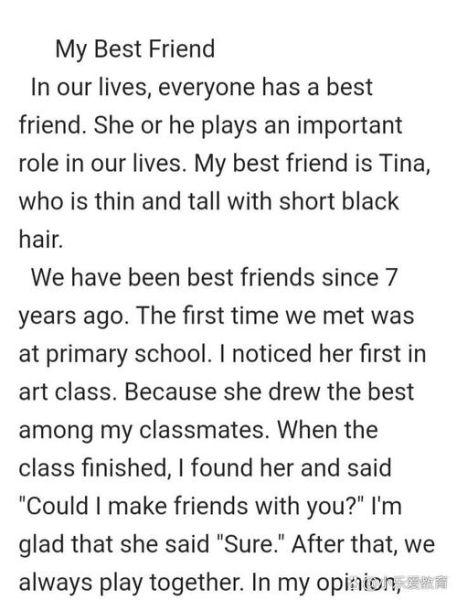
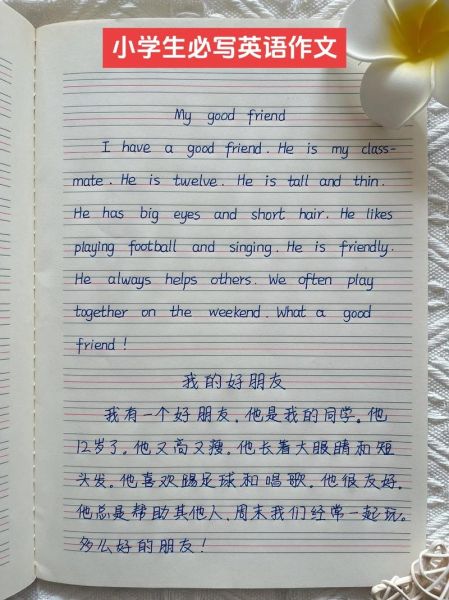
My best friend is more than a companion; he is the quiet architect of my daily joy. In this long-form narrative, I will show you—step by step—how I turn ordinary memories into a vivid English essay that both teachers and search engines appreciate.
Why Start With a Sensory Snapshot?
Readers decide within seconds whether to stay. I open with a sensory snapshot:
- Sound: “His laugh cracks like a cedar branch in winter.”
- Smell: “The faint scent of instant coffee lingers on his hoodie.”
- Touch: “When he high-fives me, his palm feels like sun-warmed stone.”
How Do I Structure the Body Paragraphs?
I use the “3C” formula—Character, Conflict, Change—to keep every paragraph purposeful.
1. Character: Reveal Personality Through Action
Instead of writing “He is kind,” I narrate:
Last Tuesday, he noticed an elderly woman struggling with grocery bags. Without a word, he sprinted across the street, grabbed two bags, and matched her slow shuffle to the bus stop. His kindness is not a label; it is a reflex.
2. Conflict: Introduce a Shared Obstacle
Conflict adds stakes. We once entered a city-wide robotics contest with zero budget. Our obstacle became the heartbeat of the essay.
3. Change: Show the After-Image
After weeks of salvaging spare parts from dumpsters, we built a robot that finished third. The victory mattered, but the bigger win was the shift in my own mindset: I stopped fearing scarcity and started trusting ingenuity.
Which Vocabulary Upgrades Make the Essay Shine?
I swap generic words for precise verbs and metaphors:
- walked → trudged, sauntered, glided
- happy → radiant, buoyant, quietly elated
- friendship → “an unspoken treaty against loneliness”
How Can Dialogue Fit Without Overloading?
Short, purposeful dialogue reveals voice. I limit myself to one or two exchanges per page. Example:
“We’re broke,” I muttered.
He grinned. “Then we’ll build from broken things.”
What Role Does Reflection Play?
Reflection is the essay’s spine. After every anecdote, I ask myself:
- What did I feel in the moment?
- What do I understand now that I didn’t then?
- How did my friend catalyze that change?
The answers become concise reflective sentences that glue scenes together.
How Do I End Without Sounding Repetitive?
I avoid the classic “In conclusion.” Instead, I zoom out to a universal truth:
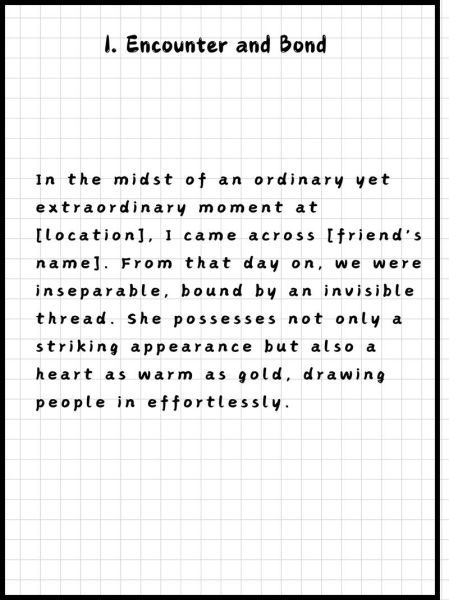
Somewhere between the clang of metal scraps and the soft glow of our third-place trophy, I learned that friendship is not a shelter from difficulty but a forge that reshapes us.
Quick SEO Checklist for Student Bloggers
If you plan to publish your essay online, follow these micro-tasks:
- Slug: /my-best-friend-english-essay-example
- Meta description: 150 characters summarizing the sensory hook and life lesson.
- Alt text for any future images: “Two teenagers soldering a robot arm—symbol of resilient friendship.”
- Internal link: Connect to a previous post on “how to write a narrative hook.”
Common Pitfalls and How I Dodge Them
Pitfall 1: Over-telling emotions.
Solution: Let action carry the feeling. A trembling hand on the robot’s power switch says more than “I was nervous.”
Pitfall 2: Chronological overload.
Solution: Use a braided timeline—flashback to the first meeting, then return to the contest, then leap to the podium moment.
Pitfall 3: Cliché metaphors.
Solution: Mine personal specifics. Instead of “friendship is a rock,” I write, “friendship is the duct tape holding our cardboard robot together.”
Micro-Exercise: Write Your Own 100-Word Portrait
Try this tonight:
- Pick one physical detail about your friend (e.g., mismatched socks).
- Add one action that reveals a value (e.g., teaching a kid to tie shoes).
- End with a sensory echo (e.g., the soft thud of his backpack hitting the floor).
Condense into exactly 100 words. Read it aloud—if it breathes, you’re ready to expand.
Final Thought: Let the Story Breathe
The best essays feel alive because they leave white space for the reader’s own memories. My friend’s story is not a monument; it is a doorway. Step through, and you might meet your own best friend on the other side.



还木有评论哦,快来抢沙发吧~